01
Performance
Speed, torque, acceleration, positioning and duty cycle
What this provides +Engineering outcome
A measurable operating profile defines continuous, peak and transient demands before technology selection.
→Engineering Services
SDT selects, adapts or develops motors, gearboxes, controllers and integrated drive assemblies around your application.
Requirements correlation
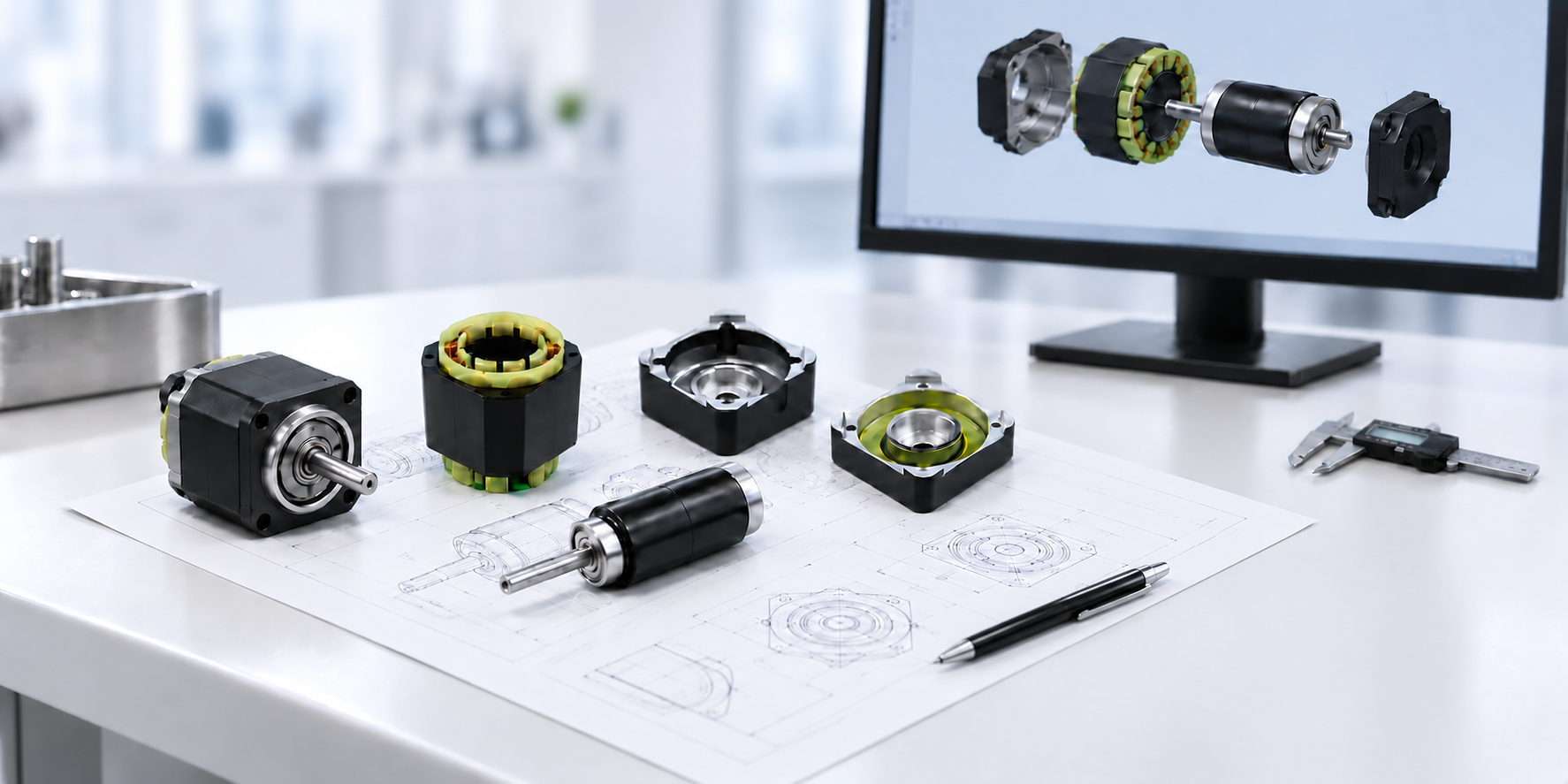
The starting point is how your equipment must operate, connect and be supplied. SDT reviews speed, torque and duty alongside the available space, mounting and shaft interfaces, power and feedback, environmental limits and intended production volume. Considering these requirements together helps identify a suitable motor and drive route and exposes design trade-offs early.
Structured engineering pathway
First, SDT agrees measurable performance targets and integration requirements with you. Suitable motor, drive and transmission options are then compared before the selected arrangement is engineered and checked against agreed criteria. The depth of analysis, prototype work and testing is matched to the project, whether it uses an existing platform, an adapted product or a new design.
Engineering scope
Motor technology, electrical, mechanical, thermal and control decisions are developed together around the same application requirement. The six areas below show how SDT selects a design direction and checks its interfaces before verification.
Engineering development evidence
Established motor-platform data, analytical design tools and representative testing are connected to shorten technical evaluation without bypassing verification.
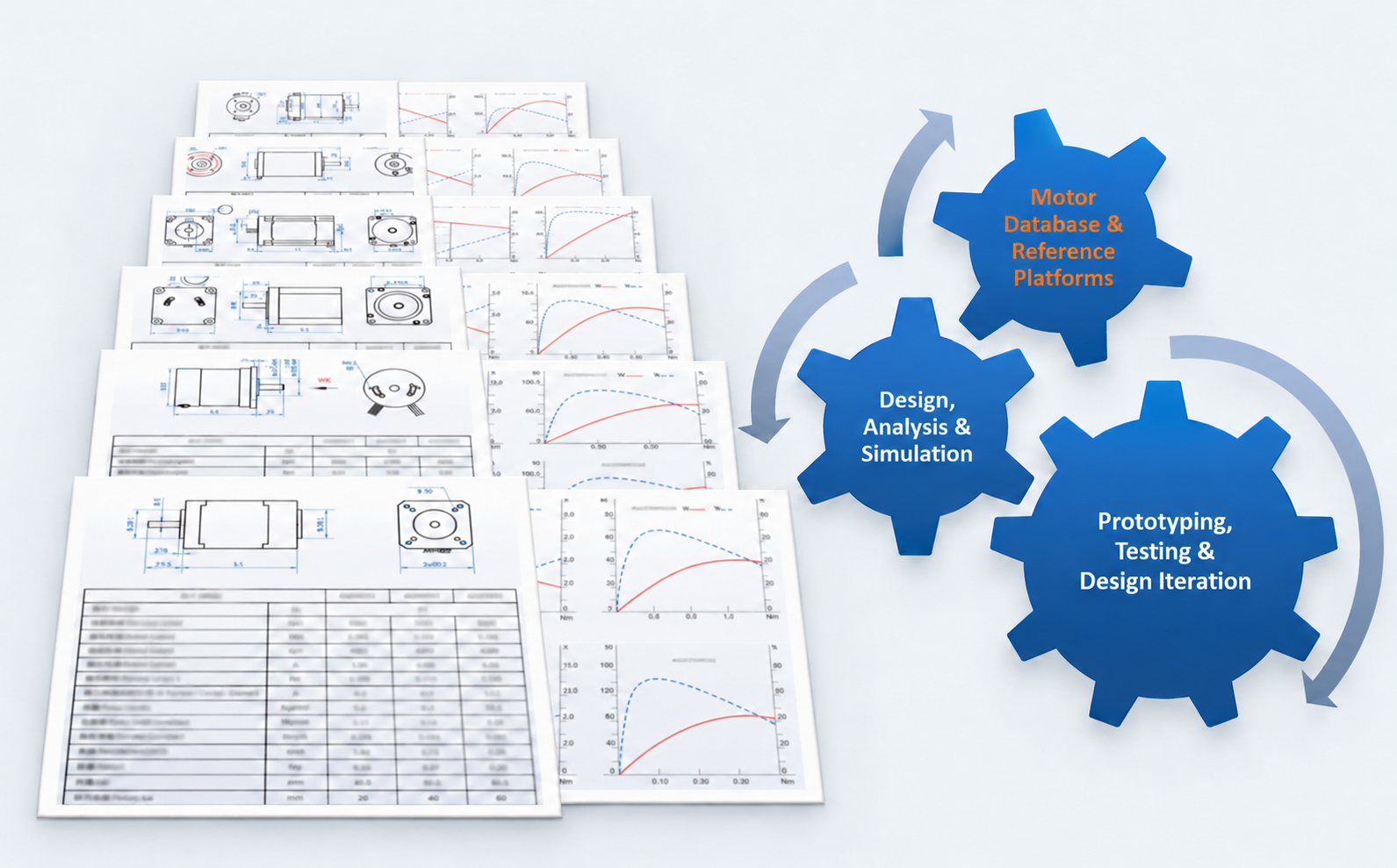
Established platform dataProvides a technically informed starting point and reduces unnecessary redevelopment.
Design analysis and simulationCorrelate electrical, mechanical and thermal decisions before prototype commitment.
Prototype correlationConfirms measured performance against the agreed application requirements.
Agreed design outputs
The output is matched to the project scope, whether SDT is configuring an established platform, modifying a product or developing a new solution.
A documented choice of motor technology, gearing, control and feedback against the duty, package and production objectives.
Agreed mechanical, electrical and control interfaces, supported by the relevant specifications and drawings for review.
Design calculations and analysis linked to measurable prototype or sample acceptance criteria for the next project stage.
Every project begins with the duty the equipment must perform: speed and torque, operating cycle, available space, power supply, installation and environment. These requirements guide the choice of motor technology and the design of the gearbox, controller and mechanical interfaces.
As the design develops, SDT checks how these elements work together against the agreed performance and production objectives. This gives the project a defined technical basis for prototype work and verification.
Start the engineering discussion
SDT’s engineering team stands ready to develop a custom solution that addresses your particular needs. We remain committed to supporting you throughout each phase of this process.